
Compression Furniture
How a Vacuum-Compressed Sofa Is Made: From Foam Core to Flat Carton
A compressed sofa is not a normal sofa put in a bag. The frame, foam, cover, seams and carton are designed together so that the product can be flattened, shipped and brought back to shape without turning into a permanent crease.
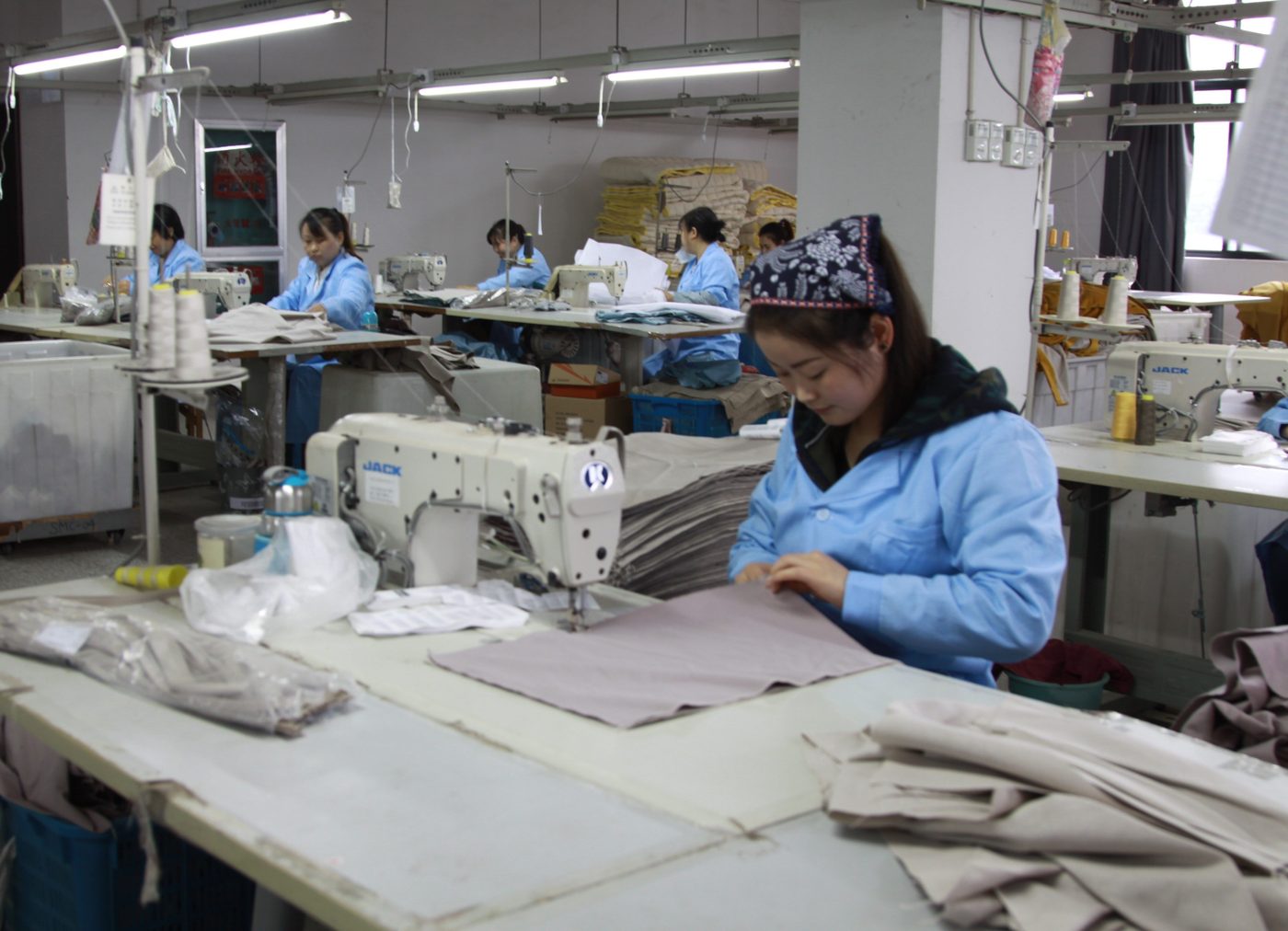
Most buyers see a compressed sofa for the first time as a carton. The interesting part is what happens before the carton is closed. This is the sequence we run when a soft seating product is designed for compression, and the points where a small decision changes the outcome.
1. Design the product for compression, not around it
The first decision is structural. A compressed sofa needs a core that can deform and recover: foam, fibre wrap, or a combination. A rigid wood or metal frame can still be used, but it has to be designed as a separate component that ships flat or assembles on site. If the frame is a fixed box, the product is not a compression candidate.
At this stage the buyer and the factory should agree on the seating feel, the intended recovery time, the packed volume target and the market. A product designed for a parcel network has different constraints from one delivered by a two-person furniture team.
2. Choose the foam and the fill
Foam is usually specified by density and hardness. Both matter, but neither tells the whole story under compression. A foam that feels right in a showroom can take a permanent set if it is compressed for too long or stored hot. The practical specification is a foam grade that has been tested in the actual construction, at the actual compression level, for the actual maximum storage period.
Fibre wrap and fibre fill need the same attention. Polyester fibre can migrate or clump if it is compressed wet or under uneven load. The fill weight should be controlled per unit, and the fill should be distributed so that the product recovers evenly rather than in one spot.
3. Cut and sew the cover with the fold in mind
The cover is where compression becomes visible. A seam that runs across a fold line will be stressed every time the product is packed and opened. A seam that sits on the fold can leave a permanent line. The pattern should place seams away from the highest-compression zones, and the seam construction should be strong enough to take the load.
Fabric choice matters too. A tightly woven fabric with a stiff finish may crease sharply; a softer knit or brushed fabric may recover more gracefully but can mark. The right answer depends on the product and the market, and it should be tested on a sewn sample rather than decided from a swatch.
4. Assemble and fill
Assembly is the step where the product becomes a sofa rather than a set of parts. The foam core is wrapped, the cover is fitted, and the fill is added to the specified weight. The unit is checked for symmetry, seam alignment and the feel of the seating surface.
This is also the point to record the measurements that will later be used for the carton: the open dimensions, the compressed dimensions and the weight. Guessing these numbers at the packing stage is how a container plan goes wrong.
5. Compress and pack
The product is folded or rolled according to the approved pattern, placed in a vacuum bag, and the air is evacuated. The compression level, the time under vacuum and the way the unit is restrained in the carton all affect recovery.
The carton is not an afterthought. It has to hold the compressed shape, protect the corners, survive stacking and present the product if it is sold direct to a consumer. Board grade, flute, internal fitments and printing are specified together with the packed dimensions. A carton that is too tight adds stress; one that is too loose gives back the volume you saved.
6. Test recovery before the container
The most useful quality check is a recovery test on a packed production sample. Open it after the intended storage period, measure the dimensions and the shape, and compare them with the approved open sample. Check the seams at the fold lines, the surface of the fabric and the feel of the foam.
Do this before the first full production run, and repeat it when the foam supplier, the fabric or the carton changes. A recovery test is not a one-off approval; it is a control on a living specification.
Where compression programmes usually go wrong
- The frame was not designed for it. A rigid box cannot be folded, and forcing it damages the product.
- The foam was chosen for showroom feel only. It recovers slowly or not at all after a long compressed storage period.
- The seam sits on the fold. The product opens with a visible line that the customer reads as a defect.
- The carton was sized by estimate. The packed volume is wrong, and the freight saving disappears or the carton fails.
- No recovery instruction. The customer opens the carton, sees a flat product and assumes it is broken.
A short buyer checklist
- Ask for the construction drawing, not only a photo of the finished product.
- Confirm which parts are compressed and which are shipped assembled.
- Ask for packed dimensions and weight, measured on a production sample.
- Ask for the foam grade and the recovery result at the maximum storage period.
- Check the seam placement at the fold lines.
- Ask for the carton drop test and the retail packaging specification.
- Ask what instructions the end customer receives.
- Run a pilot shipment before the first full container.
None of these questions requires a special factory. They require a supplier who has actually run the process and is willing to show the measurements. That is the difference between a compression programme and a compressed product that arrives damaged.
Frequently asked questions
Is a compressed sofa as comfortable as a normal sofa?
It can be, if the foam grade and fill weight are specified for the product and the recovery test is passed. Comfort is a function of the foam and construction, not of whether the product was compressed. Always judge the recovered sample, not the flat carton.
How long does a compressed sofa take to recover?
It depends on the foam, the construction, the time under compression and the temperature. There is no single number. Ask the supplier for the recovery curve measured on the actual construction, and give the customer a realistic expectation in the instructions.
Can a compressed sofa have a wooden frame?
Yes, if the frame is designed to ship flat or to be assembled by the customer. A fixed rigid frame cannot be folded. The frame, the foam and the carton have to be designed together from the start.
What is the most common cause of damage?
In our experience, the three most common causes are a frame that was not designed for compression, a seam placed on the fold line, and a carton that was sized by estimate rather than measurement. All three are design and specification issues, not shipping accidents.