Sourcing
Factory or Trading Company? How to Tell Who You Are Really Buying From
The question is not whether a supplier is a factory or a trading company. The question is whether the supplier controls the processes your product depends on - and whether you can see the evidence.
Buyers often ask us whether we are a factory or a trading company, usually because they have been told that one is better. The honest answer is that the label matters less than the control. A trading company that owns the relationship with a good factory can deliver a better result than a factory that subcontracts the part of the process you care about.
This guide explains the three common models, how they differ in practice, and the questions that reveal which one you are actually dealing with.
The three models you will meet
The factory. Owns the building, the machines and the workforce. It may still buy some components from outside, but the core process is under its roof.
The trading company. Owns the customer relationship, the export paperwork and often the quality control, but may not own any production equipment. It sources from one or more factories.
The hybrid. A factory with a separate import/export company, or a trading company with a long-term partner factory. This is common in China because the manufacturing entity and the export entity are often registered separately. Done well, it gives the buyer a single commercial contact and a real production base.
Why the label is not enough
A business licence tells you what a company is registered to do. It does not tell you who sews the cover, who fills the cushion, who runs the inspection or who owns the machine that makes the critical component.
Two suppliers can both call themselves factories. One may own the whole process; the other may own a warehouse and a sales office while the work happens elsewhere. Both may be legitimate. Only one gives you the control you thought you were buying.
Questions that reveal the model
Ask these questions early, and ask for evidence:
- What is the full production address? Not the sales office. The place where the product is made.
- Which processes happen on that site? Sewing, cutting, filling, quilting, compression, inspection, packing - ask for each one.
- Which processes are subcontracted? A good supplier will name them. A vague answer is a warning.
- Can we see the line your product would run on? A live video walkthrough is enough for a first check.
- Whose name is on the export documents? The manufacturer and the exporter may differ; that is normal, but you should know.
- Who signs the inspection report? The factory, the trading company, or a third party?
- Who owns the tooling, patterns and moulds? This matters for reorders and for switching suppliers.
Documents worth checking
- Business licence - legal name, registered address, scope of business and establishment date.
- Factory audit report - who audited it, when, and what the report covers.
- Certification certificates - check the certificate number, the certified site and the validity date, not only the logo.
- Export records - where available, they show the actual exporter and the product categories.
- Product test reports - the report should name the product and the standard, not just the laboratory.
None of these documents proves quality on its own. Together they tell you whether the story is consistent.
When a trading company is the better choice
A good trading company can be the right partner when:
- Your product needs several factories and you want one commercial contact.
- You need export documentation, consolidation and logistics that the factory does not handle well.
- The trading company has deeper product knowledge than any single factory.
- You value a supplier who can switch production between factories when one is full or fails.
The risk is the opposite: if the trading company does not control quality, the buyer discovers the problem at the port. The mitigation is the same as with a factory - visibility, inspection and written specifications.
When a factory is the better choice
Direct factory relationships are usually stronger when:
- Your product depends on a specific process the factory owns.
- You need to develop a new construction and iterate quickly on the line.
- You want to see and approve the actual production process.
- You need a long-term cost structure based on the real bill of materials.
The risk is that a factory may be excellent at one process and weak at another. Ask which steps are in-house and which are not.
How our own structure works
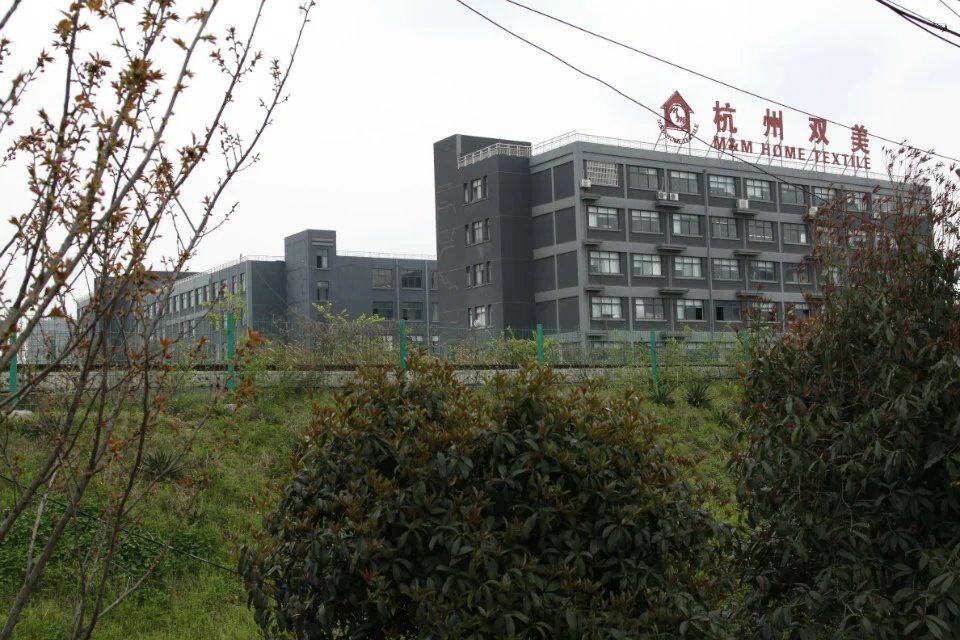
For transparency: M&M operates as a factory and an export company. The manufacturing site is Hangzhou M&M Home Textile Co., Ltd.; in China, the export entity is often a separate company, so ask which legal entity will appear on your documents. The processes we run on our own floor include sewing, filling, compression and forming, trim and pom-pom making, folding and finishing, inspection and packing. We also buy some components from specialist suppliers, and we say so when a project depends on them.
That is the level of detail a buyer should expect from any supplier. It is more useful than the word 'factory' on a website.
Red flags worth taking seriously
- The production address changes when you ask for a video tour.
- The supplier cannot name the processes that are subcontracted.
- The certificate shows a different company name or a different site.
- The audit report is older than the supplier claims, or the scope does not cover your product.
- The quotation is much lower than everyone else's without a clear explanation of what was changed.
- The supplier will not put the specification, the inspection criteria or the tooling ownership in writing.
None of these is proof of fraud. Each is a reason to ask a better question before you send a deposit.
Frequently asked questions
Is a factory always cheaper than a trading company?
Not necessarily. A factory may have lower overhead, but a trading company may have better access to multiple factories and better logistics. Compare the total landed cost and the control you get, not the label.
Can a trading company be trusted?
Yes, if it can show which factory makes your product, who controls quality and who is responsible when something goes wrong. The risk is not the business model; it is a supplier that hides the production chain.
Why do some Chinese factories also have a trading company?
Manufacturing and export are often registered as separate entities. A factory may have an import/export arm for documentation and customer relationships. It is common and can be legitimate, as long as the production site and the responsible party are clear.
What is the single best question to ask?
Ask which processes for your specific product happen inside the supplier's own building, and which are subcontracted. The answer tells you more than any company label.