Custom Manufacturing
From Sketch to Sample: How a Custom Home Textile Product Is Actually Developed
A custom home textile product rarely fails because the idea was bad. It fails because the brief was incomplete, the sample was approved without a specification, or the cost was engineered after the design was fixed. This is the sequence that avoids those three failures.
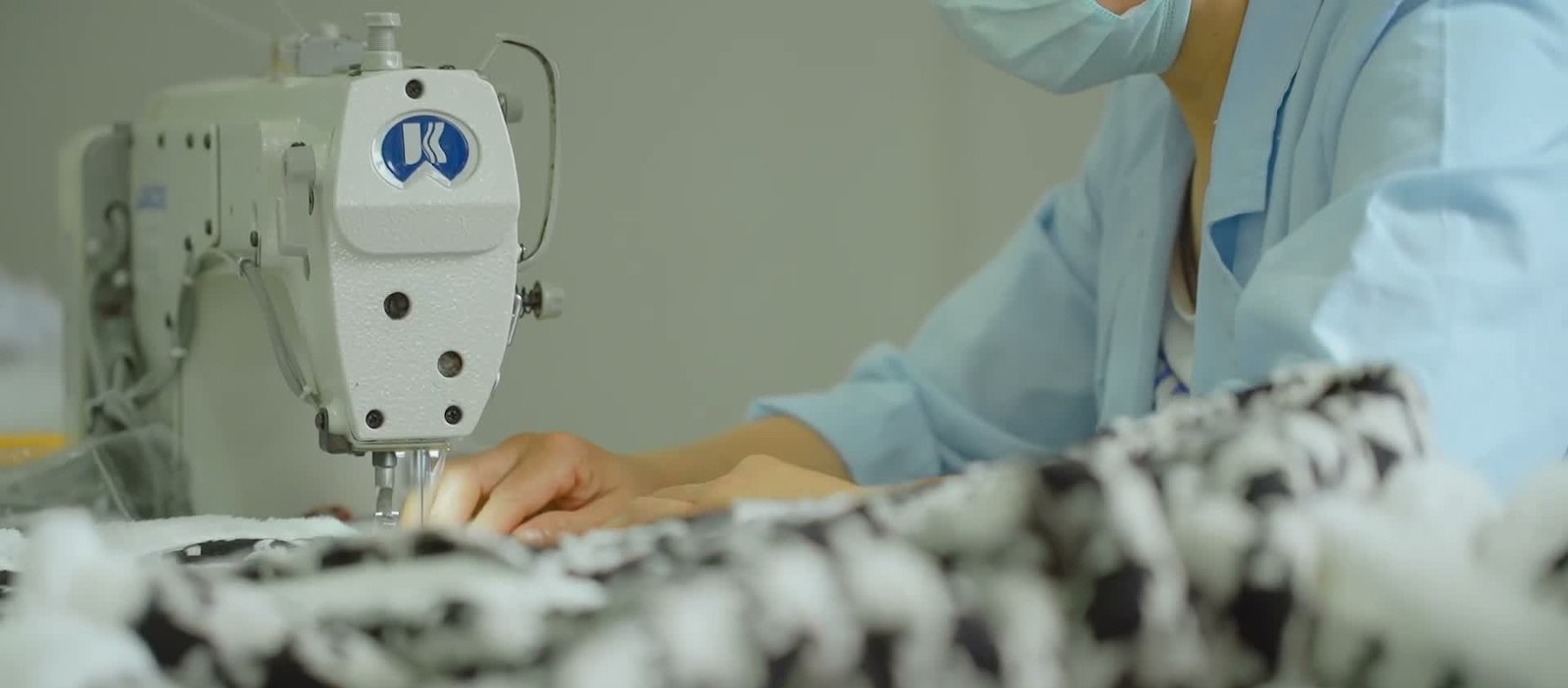
Development is the part of a custom order where money is saved or lost. A clear process does not by itself produce a good product, but it makes the expensive surprises visible early, while they are still cheap to fix.
The sequence below is the one we use for cushions, throws, bedding, sleep bags and soft furniture components. It is deliberately boring: most of the value is in the order of the steps and in writing things down.
1. Write a brief that a factory can act on
A sketch is a starting point, not a brief. The brief should answer:
- Who is it for? A hotel buyer, a DTC brand, a gift retailer and a pet owner need different things from the same object.
- Where will it be used? Indoors, outdoors, machine-washed, commercial laundry, travel, or a clinical setting.
- What must it do? Warmth, support, compression, packability, wipe-clean, hypoallergenic, decorative.
- What is the target price and volume? These decide the material and construction envelope.
- What is fixed and what is open? Colour, size, logo, packaging and certification requirements.
A brief that says 'like this photo, but cheaper' will produce a sample that looks similar and behaves differently. The factory will guess which parts matter, and the guess is often wrong.
2. Turn the brief into a specification
The specification is the document that survives the sample. It should include the dimensions with tolerances, the fabric and filling, the construction, the colour standard, the label and packaging, the test requirements and the approval criteria.
Write it before the first sample. It will change, but it gives the sample a target and gives the factory a way to quote consistently. A sample approved without a specification is an opinion; a sample approved against a specification is a decision.
3. Choose materials against three criteria at once
Every material choice is a trade-off between cost, performance and compliance:
- Cost - the fabric, the fill, the trim and the labour to handle them.
- Performance - hand feel, durability, shrinkage, pilling, colour fastness, washability.
- Compliance - fibre content labelling, flammability rules for the destination market, chemical restrictions and any customer-specific requirement.
A swatch that feels right on the desk may not survive a wash test or a commercial laundry cycle. Ask for the test data and, where it matters, run a wash or abrasion test on the actual construction.
4. Run sample rounds with a purpose
Development usually takes more than one sample, but each round should have a defined question:
- Concept sample - does the construction work at all?
- Fit and feel sample - dimensions, filling, hand feel, seam placement.
- Colour and material sample - the final fabric, colour standard and trim.
- Cost-engineered sample - the version that can be produced at the target price.
- Golden sample - the approved reference for production, sealed and signed.
Combining all five into one round feels faster and usually costs more, because the changes interact. A cheaper filling changes the fit; a different seam changes the hand feel; a lower-cost fabric changes the colour.
5. Engineer the cost before the design is frozen
Cost engineering is not a discount conversation at the end. It is a design activity:
- Can the panel layout use the fabric width more efficiently?
- Can a trim be made in-house rather than bought in?
- Can the filling be changed without changing the feel?
- Can the packaging be simplified without hurting the unboxing?
- Can the product be compressed or flat-packed to reduce freight?
Each change needs to be tested against the approved sample. A cost reduction that changes the feel or the recovery is not a saving; it is a new product with an old approval.
6. Approve against the specification, then seal the sample
The approval meeting should compare the sample with the specification, not with the original mood board. Record the result: what was approved, what was waived, what still needs testing. Then seal a golden sample and keep it with the production file.
The golden sample is the reference for the factory floor and for any future reorder. Without it, every reorder becomes a new development project.
7. Carry the specification into production
Production should start only when the golden sample and the written specification agree. The first production units should be compared with the golden sample, and the comparison should be recorded. If the production sample and the golden sample differ, the difference is resolved before the run continues.
This is also the moment to confirm the packaging, the labels, the carton markings and the inspection criteria. A product that is right but packed wrong is still a problem at the customer's door.
What a good development file contains
- The brief, with the user, use case, market and target price.
- The current specification, with dimensions, tolerances and materials.
- The colour standard and any lab-dip approvals.
- The test reports that matter for the market.
- Photos and measurements of each sample round.
- The approved golden sample and the signed approval record.
- The packaging specification and the inspection checklist.
If a supplier cannot produce this file at the end of development, the order is being run on memory. Memory is not a quality system.
Frequently asked questions
How many sample rounds does a custom product need?
It depends on the product and how much is new. A simple cushion in an existing construction may need one or two rounds. A new compressed furniture piece or a product with a new filling usually needs more. Each round should have a defined question so the process does not repeat the same sample.
Can you develop from a photo?
A photo is enough to start a conversation, not enough to quote or produce. We need the size, the intended use, the target market, the expected quantity range and the features that matter. From there we can propose a construction and a material envelope.
Who owns the design and the tooling?
That should be agreed in writing before development starts. Ownership of the design, the pattern, the mould or tooling and the right to reuse the construction are commercial terms, not something to settle after the first order.
How do you keep the production run consistent with the sample?
With a sealed golden sample, a written specification and a first-article check at the start of production. The golden sample is the reference for the line and for any reorder.